
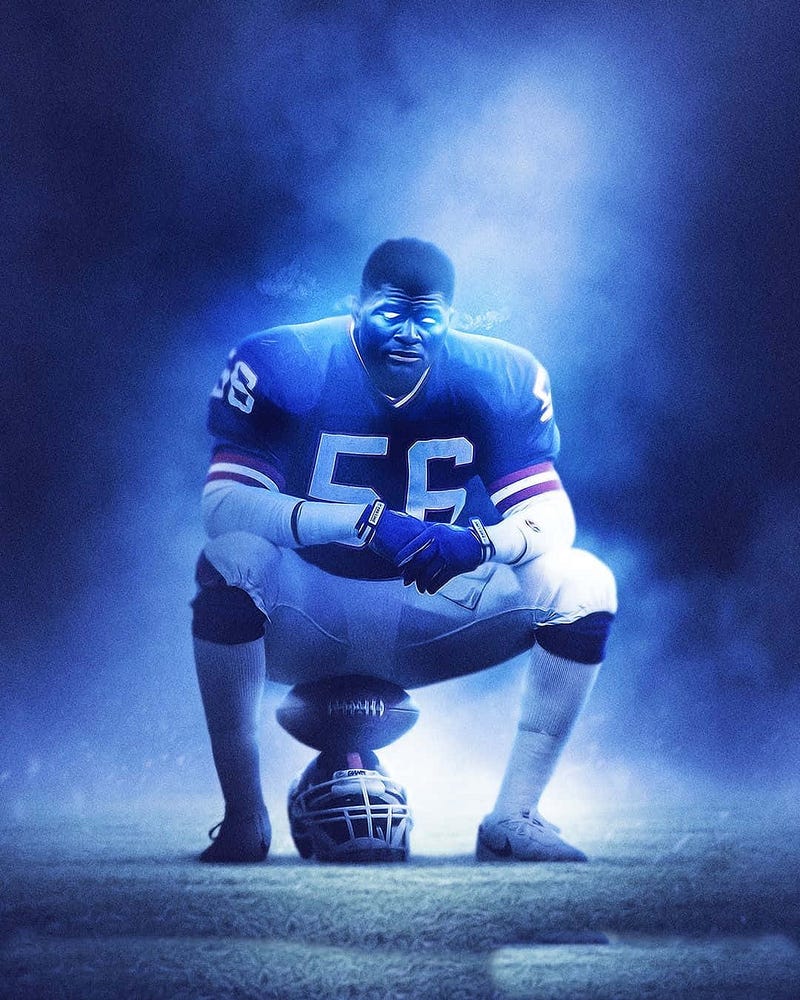
Beyond the crushing tackles and athletic displays lies an invisible battlefield where mind games determine winners long before the scoreboard does.
In the waning moments of Super Bowl LIV, as the San Francisco 49ers’ championship hopes collapsed under Patrick Mahomes’ onslaught, something peculiar happened on the Chiefs’ sideline. Defensive coordinator Steve Spagnuolo turned to safety Tyrann Mathieu and whispered something. Mathieu nodded, approached the line of scrimmage for the next defensive play, and said three words to 49ers quarterback Jimmy Garoppolo.
Three words that visibly rattled the quarterback.
Garoppolo threw an incompletion on the next play, followed by an interception that effectively sealed the game.
What were those three words? Neither Mathieu nor Garoppolo will say publicly. However, according to a Chiefs defensive coach who requested anonymity, they referenced a specific tendency Garoppolo displayed throughout the season — one that Kansas City had identified and exploited all game long.
This moment exemplifies the psychological dimension of professional football that fans rarely glimpse but that increasingly determines outcomes at the sport’s highest level.
The Mind Game Behind the Physical Game
Professional football is the ultimate physical contest: 300—pound linemen collide, receivers accelerate to superhuman speeds, and quarterbacks absorb bone-crushing hits. Yet beneath this visible spectacle lies an intricate psychological battle that coaches, players, and team psychologists craft with scientific precision.
“The physical aspect of football is maybe 60 percent of the game now,” explains Dr. Michael Peterson, former performance psychologist for three NFL teams. “The other 40 percent is mental — not just knowing assignments, but psychological warfare. Who can break the other team’s concentration, create doubt, and exploit cognitive weaknesses.”
This psychological dimension operates on multiple levels, from organizational culture to gameday tactics to individual matchups. Teams that master these invisible dynamics gain advantages that no stat sheet captures.
Weaponizing Information: The New Intelligence War
The NFL’s psychological battlefield begins long before kickoff with intelligence gathering that would impress government agencies.
“Every team now employs people whose sole job is tracking personal information about opponents,” reveals Marcus Johnson, a veteran NFL scout. “Relationship troubles, financial problems, health issues in the family — anything that might indicate vulnerability or distraction.”
While teams have always studied opponents’ playing tendencies, this personal intelligence gathering represents a newer, more invasive frontier. This information shapes targeted psychological tactics deployed during games.
Consider the case of a Pro Bowl offensive tackle who experienced an uncharacteristically poor performance against an average defensive end in 2019. What fans didn’t know: the defensive end had spent the game whispering details about the tackle’s ongoing divorce proceedings — information gathered from the tackle’s estranged wife’s public Instagram posts.
“He knew things nobody should have known,” the offensive tackle later admitted to teammates. “It completely took me out of my game.”
This intelligence war extends to tracking opponents’ social media activity, monitoring player interviews for signs of insecurity, and even — according to two team executives — hiring private investigators to compile dossiers on key opponents.
The Science of Breaking Confidence
Beyond gathering intelligence, teams systematically undermine opponents’ confidence using principles derived from sports psychology and cognitive science.
“Professional athletes operate in flow states that depend on unshakable confidence,” sports psychologist Dr. Rebecca Chen explains. “Disrupt that confidence, even momentarily, and performance deteriorates dramatically.”
Teams deploy various techniques to create these disruptions:
Targeted Trash Talk
While trash talk seems like spontaneous bravado, elite practitioners use it with surgical precision. All-Pro cornerback Richard Sherman famously studied communication styles of opposing receivers to customize his psychological approach.
“Some guys fold if you attack their technique. Others crumble if you mention their contract situation,” Sherman explained in a 2021 podcast. “I had different approaches for different receivers based on what would get under their skin.”
Former Ravens linebacker Ray Lewis took this approach further, compiling what teammates called his “weakness book” — specific verbal triggers for opponents based on their personal histories, playing insecurities, and recent mistakes.
“It wasn’t random,” explains former Ravens defensive coordinator Rex Ryan. “Ray knew exactly what would make each quarterback or running back hesitate for that crucial half-second.”
Pattern Disruption
NFL teams increasingly employ “pattern breakers” — unexpected tactics to disrupt opponents’ mental routines.
The Patriots under Bill Belichick became masters of this approach. Before a crucial 2018 game against the Chiefs, New England noticed quarterback Patrick Mahomes’ habitually adjusting his helmet with both hands after receiving play calls. During the game, Patriots defenders repeatedly yelled “Shift!” just as Mahomes reached for his helmet — causing momentary confusion about whether the defense was shifting or creating distraction.
“It sounds trivial,” notes former Patriots linebacker Tedy Bruschi, “but these micro-disruptions accumulate. By the fourth quarter, the quarterback second-guesses everything — including his routine.”
Exploiting Performance Anxiety
Perhaps most sophisticated is how teams target known pressure points in opponents’ mental game.
A striking example occurred during the 2017 playoff game between the Vikings and Saints. Minnesota identified that Saints safety Marcus Williams struggled with tackling anxiety in critical situations—a weakness rarely displayed but documented in the Vikings’ scouting reports. In the game’s final drive, Vikings play-callers deliberately designed routes to force Williams into open-field tackling situations, culminating in the missed tackle that allowed the “Minneapolis Miracle” touchdown.
“We knew Williams got in his head during big tackle moments,” a former Vikings assistant coach revealed. “That final play targeted his psychological profile as much as his playing position.”
Inside the Minds: Players Who Master the Mental Game
Certain players have elevated psychological manipulation to an art form, building reputations as mental chess masters among their peers.
Tom Brady’s psychological prowess remained primarily invisible to fans but was legendary among defenders. Beyond his physical gifts, Brady systematically undermined defenders’ confidence through subtle tactics, from identifying which defenders reacted emotionally to mistakes to manipulating officials within earshot of opponents who had just been penalized.
“Brady would compliment refs on their calls when defenders were nearby,” reveals former Dolphins defensive end Cameron Wake. “He’d say, ‘ Great call on that holding, he’s been doing it all day.’ In the next series, that defender hesitates and is worried about flags. Pure psychological genius.”
Few mastered mental manipulation on defense like former Ravens safety Ed Reed, who elevated deception to unprecedented levels.
“Reed would deliberately display false tendencies in the first quarter,” explains former Ravens defensive coordinator Rex Ryan. “He’d show a specific reaction to certain formations three or four times, knowing quarterbacks would identify the pattern. Then he’d break the pattern for an interception in crucial situations.”
Perhaps most notorious was Ndamukong Suh, whose psychological tactics extended beyond his well-publicized aggressive play.
“Suh would memorize information about offensive linemen’s families and businesses,” a former teammate reveals. “In the trenches, between plays, he’d casually mention a lineman’s wife’s name or their kid’s school. It was chilling how specific the information was — and how effectively it distracted opponents.”
The Dark Arts: Controversial Psychological Tactics
Some psychological tactics cross into ethically questionable territory, creating controversy within the league.
Several teams have admitted manipulating injury information to target players returning from specific injuries. In a particularly controversial example, Panthers linebacker Luke Kuechly faced an unusually high number of plays targeting his coverage responsibilities immediately following his return from concussion in 2016 — a pattern repeated across multiple teams facing players returning from head injuries.
“It’s uncomfortable to acknowledge, but targeting recently concussed players with complex mental processing plays is a strategy,” admits a current NFL offensive coordinator who requested anonymity. “We design plays that force them to make quick diagnostic decisions, knowing they’re often hesitant after returning from head injuries.”
Even more controversial is the deliberate triggering of emotional reactions in players with known penalty histories or frustration issues.
“There are players known as ‘penalty inducers’ whose real job is getting opponents flagged,” explains veteran NFL referee Walt Coleman. “They’ve studied which opponents have short fuses and exactly what buttons to push to cause costly penalties.”
Former Seahawks cornerback Richard Sherman has called out this practice: “Some guys are on rosters primarily because they’re good at getting opponents to lose control. It’s not about their playing ability — it’s their psychological manipulation skills.”
The Countermeasures: Mental Armor in the Modern NFL
As psychological warfare intensifies, teams are developing sophisticated countermeasures to protect players’ mental states.
The Seahawks under Pete Carroll pioneered comprehensive psychological training, bringing in performance psychologists and meditation experts to build players’ mental resilience. Russell Wilson famously worked with mental conditioning coach Trevor Moawad to develop “neutral thinking” — a cognitive approach that protected him from emotional manipulation during games.
Other teams employ more targeted approaches. The Chiefs provide offensive linemen with custom in-helmet ear plugs that selectively filter frequencies, allowing them to hear quarterback signals while blocking out the specific pitch ranges most commonly used for trash talk.
Perhaps most advanced, several teams now conduct psychological vulnerability assessments of their players to identify and address potential weak points before opponents can exploit them.
“We do full cognitive and emotional profiles,” explains a current NFL team psychologist. “If a player has sensitivity around a specific topic — maybe family issues or performance under pressure — we build customized mental training to strengthen that area before it becomes a target.”
Some players develop their mental armor. All-Pro receiver DeAndre Hopkins created what he calls “sensory narrowing,” a technique that eliminates peripheral awareness during crucial plays, rendering trash talk inaudible.
“When the ball’s in the air, I enter a mental state where I can’t hear anything except my breath,” Hopkins explained. “It took years of meditation to develop, but it makes me immune to psychological tactics in crucial moments.”
The Future: Cognitive Science and the Next Frontier
As teams exhaust current psychological tactics, the next frontier involves even more sophisticated applications of cognitive science.
Several NFL organizations now employ neuroscientists to identify cognitive biases in decision-making that might affect opponents’ coaching staffs. By tracking statistical tendencies, these specialists can predict how specific coaches will respond to pressure situations based on their psychological profiles.
“We know some coaches become significantly more conservative on fourth down when they’ve recently experienced a failed conversion,” explains Dr. Sarah Williams, a cognitive scientist consulting multiple NFL teams. “Others show distinct play-calling patterns when nationally televised games versus regional broadcasts. These are cognitive biases we can exploit.”
Some teams are exploring even more advanced territory. Two NFL franchises reportedly use artificial intelligence to analyze opponents’ micro-expressions during press conferences and sideline footage, identifying emotional states that might indicate areas of concern or confidence.
“The technology can determine with surprising accuracy when a coach is expressing false confidence about an injured player’s status,” notes sports technology expert Marcus Chen. “These micro-expression analyses inform game planning in ways that weren’t possible five years ago.”
The Human Element in a High-Tech Game
Despite escalating psychological sophistication, the most effective practitioners emphasize that the core of mental warfare remains fundamentally human.
“All the technology and science ultimately comes down to one question: can you make another professional athlete doubt himself at the crucial moment?” says Hall of Fame cornerback Deion Sanders. “That’s been the game within the game since football began.”
What’s changed is the scientific precision and organizational resources dedicated to this invisible battlefield. As former Patriots linebacker Tedy Bruschi puts it: “Fans see the hits and the touchdowns. They don’t see the psychological operations departments working year-round to identify how to break another man’s confidence when millions are watching and everything’s on the line.”
For players caught in this mental crucible, the challenge becomes maintaining authentic performance while surrounded by psychological manipulation.
“The greats can acknowledge the mind games without being controlled by them,” explains Dr. Peterson. “They recognize the psychological tactics while staying connected to their performance fundamentals.”
As the 2023 NFL season approaches, teams are already gathering intelligence, crafting targeted psychological approaches, and preparing for battles that will never appear in box scores but will decisively impact who hoists the Lombardi Trophy.
The next time you see a puzzling mistake by an otherwise flawless athlete, or a team unexpectedly losing composure in a crucial moment, remember: you’re likely witnessing the effects of the hidden game. This psychological warfare increasingly separates champions from contenders in today’s NFL.

 Blair Steward