
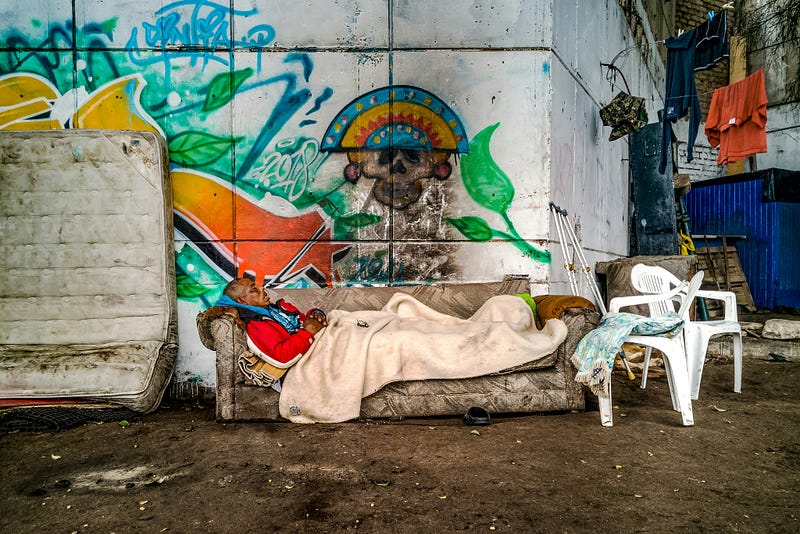
Hidden Genius of America’s Forgotten Artists: Unveiling the Shadows of Inequality
In the heart of America, a wealth of untapped potential lies, often overlooked and undervalued. The streets of our cities are not just concrete and steel; they are canvases painted with the stories of those who have been left behind by society’s relentless pursuit of success and wealth. Among the homeless, the addicted, and the marginalized, there are artists, poets, and visionaries whose voices are silenced by the harsh realities of poverty and lack of support. The notion that success is reserved for those who “know the right people” or have financial privilege is a narrative that has robbed America of its true artistic spirit. It’s a narrative that suggests being poor makes one unfit for greatness, that being born into the wrong family or community dooms one to a life of obscurity. But the truth is far more complex and often far more tragic. What these individuals need is not just recognition of their potential, but the support of a community that values their unique contributions.
The Price of Ambition
Consider the countless individuals of all ages and races who find themselves sleeping on park benches or in crack houses. Some of these individuals could have become presidents, poets, or authors if they had been given the opportunity. Their circumstances do not diminish their potential; instead, they are merely obscured by the weight of societal indifference and a lack of opportunities. The notion that ambition and talent are sufficient for success is a myth perpetuated by those in power. In reality, success often depends on who you know, where you come from, and how much money you have. This system of nepotism and elitism, compounded by the intersection of racism and classism, has created a society where those with the right connections often overshadow true talent. It’s crucial to recognize that these systemic issues, not individual shortcomings, are the root cause of the struggles faced by many aspiring artists. Early intervention is not just necessary, it’s urgent.
The Cycle of Abuse and Neglect
Growing up in an unsupportive or abusive family environment can alienate children from the world, leaving them with zero coping skills and a profound sense of social awkwardness. For many, addiction becomes the only support system, a coping mechanism to numb the pain of a life devoid of understanding and encouragement. The cycle of abuse and neglect is a vicious one, often passed down from generation to generation. Children who grow up in such environments are at a higher risk of developing mental health issues, substance abuse problems, and a sense of isolation that can be debilitating. The lack of a supportive family structure can have long-lasting effects on an individual’s ability to form healthy relationships, pursue their passions, and achieve their full potential.
A Personal Journey
Despite the challenges, I found solace in my writing. I penned a book, ‘Miracle Uprising,’ a testament to the resilience of the human spirit even in the darkest of times. I was in a constant state of intoxication, unaware that sobriety was even a possibility. Yet, amidst the chaos, I knew I was a good writer. Writing became my refuge, a means to comprehend the world around me and to articulate the emotions that I couldn’t voice. My journey is a testament to the potential that lies within every marginalized artist, a potential that can be unlocked with the proper support and opportunities.
I had been screaming for my parents to help me become the next Elvis, because I loved playing the guitar. I yelled at them to help me become the next Shakespeare, because I loved writing. I am being figurative when I say “screamed” or “screaming.” They didn’t take me seriously, though. They were too preoccupied with their problems. We need to take our kids seriously. Their lack of support and understanding pushed me further into a cycle of self-destruction and despair.
It took me at least a decade longer to “grow up” because of the emotional neglect and lack of support I experienced as a child. I am now at a point where I’m doing crazy things, like reaching out to big celebrities on Twitter to ask them for a tweet. I feel like I am screaming out for all of the love that I was supposed to receive as a child. Maybe I needed a little more love than most kids, and that made it worse. But that’s okay, that is the entire point — being different is OK. The sooner we learn that, the better off we will be.
Now, I am promoting my books to share my story and the stories of others like me. I was once a semi-professional quarterback in the EFL from 2011 to 2015, a dream that was cut short by a Lisfranc injury. The road to recovery was brutal; I had to walk miles every day on a walking boot, a necessity after my surgery, but a burden in my homelessness. Now, at 35, I face the prospect of foot surgery once again, a reminder of the physical toll my journey has taken.
The Impact of Injury and Homelessness
My story is not unique. It is a reflection of a system that fails to support its most vulnerable members. Homelessness and injury often go hand in hand, creating a cycle that is difficult to break. For those who are homeless, access to proper medical care is usually limited, and the stress of living on the streets can exacerbate existing health issues. The physical and mental toll of homelessness can be devastating, leaving individuals feeling trapped and hopeless.
I was in and out of county prison for stupid drunken charges. The charges weren’t bad; I didn’t have an address for them to mail my court date to. This caused them to issue a warrant for my arrest. This then caused me to spend 6 weeks at Dauphin County prison due to prison overcrowding and the congested court funnel. This was just one of my stints in jail for the same ridiculous reasons. Each time, I met geniuses of all races on the streets and in jail. Their parents either didn’t have money or didn’t care about their dreams, mostly. Obviously, there are exceptions. I saw firsthand how the lack of support and understanding can lead to a life of struggle and despair.
The Stigma of Mental Health
We offer support for those already severely addicted, but we fall short in providing consistent, long-term care. We see a black man passed out under a park bench with empty beer cans and assume he is a parasite, not a person with a story, a talent, or the potential to contribute to society. The stigma surrounding mental health and addiction is a significant barrier to seeking help. Society often views those struggling with mental health issues as weak or flawed, rather than recognizing the strength it takes to seek help and overcome these challenges. This stigma is further exacerbated by racial biases, where individuals from marginalized communities are often judged more harshly and offered fewer opportunities for recovery and support.
Ending the Stigma
We need to end the mental health stigma in America. We need to recognize that racism, wealth discrimination, and the lack of support for the arts are robbing us of greatness. We are leaving behind individuals who could have become great artists, poets, or leaders. We must find a way to catch mental health and abuse issues early and provide support to every child, regardless of their race or their parents’ financial status.
The Power of Early Intervention
Early intervention is key to breaking the cycle of abuse and neglect. By providing support and resources to children at a young age, we can help them develop the coping skills and resilience they need to thrive. This includes access to mental health services, educational opportunities, and a supportive community. When we invest in our children, we are investing in the future of our society. Every child has the potential to be the next artist of love, health, or whatever their heart decides to pursue. It is our responsibility as a society to empower them, to see the potential in every individual, and to create a world where greatness is not reserved for the privileged few but is accessible to all.
Community support is crucial in providing a safety net for those who are struggling. This includes access to affordable housing, healthcare, and educational opportunities. When we create a supportive community, we not only help those in need but also enrich our own lives in the process. The arts, in particular, have the power to bring people together, to inspire and uplift, and to create a sense of community that transcends social and economic barriers. However, for many communities of color, access to these opportunities is limited, further widening the gap between potential and achievement.
The arts have always been a powerful catalyst for social change. From literature and music to visual arts and theater, the creative expressions of artists can challenge societal norms, provoke thought, and inspire action. By supporting the arts, we are investing in a future where creativity and innovation thrive. We are creating a society that values the unique perspectives and voices of all its members, regardless of their background or circumstances. This includes ensuring that artists from diverse backgrounds have equal access to platforms and resources, allowing their voices to be heard and their stories to be told.
It is time for America to recognize the actual value of its artists and to provide the support they need to thrive. This includes ending the stigma surrounding mental health, providing early intervention for children at risk, and creating a supportive community that values the arts. When we empower our artists, we are empowering the future of our society. We are building a world where greatness is not reserved for the privileged few but is accessible to all. This means actively seeking out and supporting artists from all walks of life, ensuring that systemic barriers do not silence their voices.
Conclusion
The hidden genius of America’s forgotten artists lies in the streets, on the park benches, and in the crack houses. It is a genius that the harsh realities of poverty, racism, and lack of support have been obscured. But it is a genius that is waiting to be discovered, nurtured, and celebrated. By ending the mental health stigma, providing early intervention, and creating a supportive community, we can unlock the true potential of our society. We can make a world where every individual, regardless of their background or circumstances, has the opportunity to shine. Let us empower the forgotten artists of America and see the greatness that lies within them. Together, we can build a society that values and supports the diverse voices and talents that make us truly remarkable. I hope God wakes us up one day and we stop judging people on wealth, race, and health. Yes, this means mental health, too. We rob ourselves of greatness by leaving these brothers and sisters on the streets and in their cages in prison.

 Blair Steward