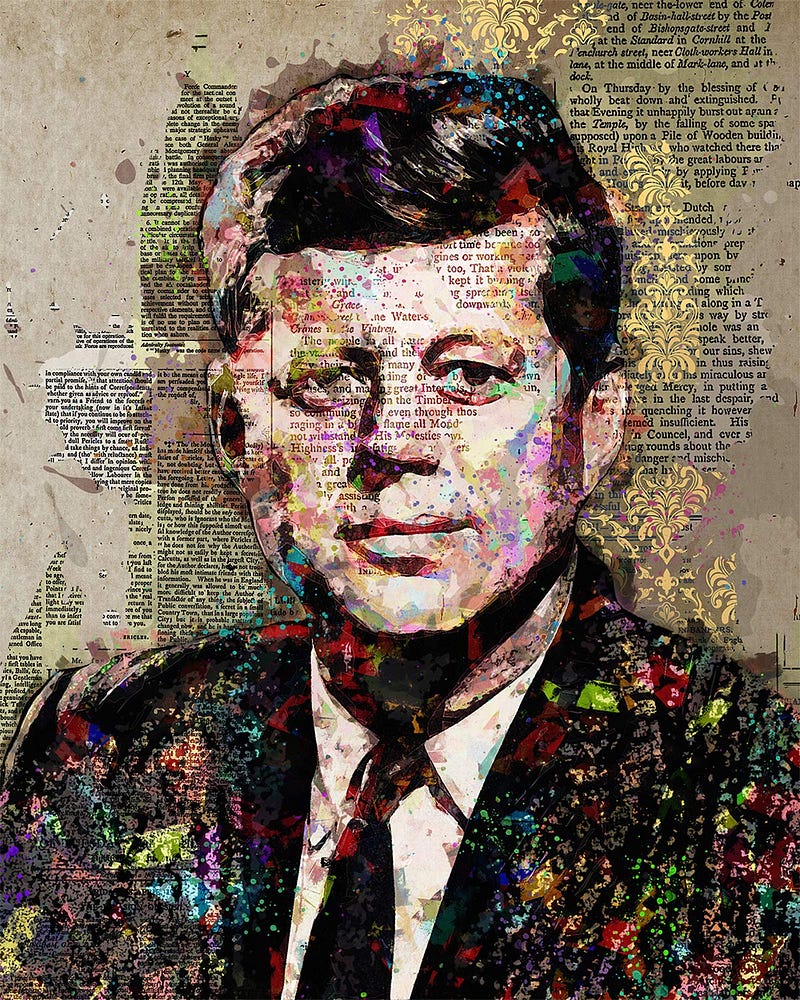
JFK Assassination: What the Newly Released Files Reveal

The assassination of John F. Kennedy on November 22, 1963, remains one of America’s most debated mysteries. Over the decades, countless theories have emerged, fueled by government secrecy, conflicting witness reports, and the slow release of classified materials. Even after the Warren Commission’s official conclusion that Lee Harvey Oswald acted alone, skepticism has persisted.

The continued release of classified documents—most recently under the JFK Records Act—has given us a clearer picture. While some questions remain, these newly revealed files provide insight into what the government knew, what it may have covered up, and whether conspiracy theories hold any merit.

So, what do these new files reveal? Do they confirm the lone gunman theory or fuel suspicions of a broader conspiracy? Here’s what we now know.

1. U.S. Intelligence was tracking Lee Harvey Oswald

One of the most significant revelations is the extent to which U.S. intelligence agencies were tracking Lee Harvey Oswald before the assassination. The newly released documents confirm that the CIA, FBI, and other agencies had Oswald under surveillance long before November 22, 1963.

Oswald had traveled to Mexico City just weeks before the assassination, where he visited both the Soviet and Cuban embassies in an attempt to secure a visa. The CIA intercepted Oswald’s communications during this time but took no direct action against him. This raises questions about why intelligence agencies did not see him as a significant threat.

A significant concern arising from this revelation is the possibility of an intelligence failure. If the CIA and FBI were monitoring Oswald, did they fail to prevent the assassination — or worse, did they let it happen? Some researchers believe the agencies knew of his movements but underestimated his potential danger. Others argue that intelligence officials ignored warning signs because of bureaucratic inefficiencies or a desire to conceal prior contact with Oswald.

2. The CIA Had Secret Links to Oswald and Concealed Evidence

For decades, the CIA has maintained that it had no direct involvement with Lee Harvey Oswald. However, the new documents challenge this claim.

Recently declassified files reveal that the CIA had a secret file on Oswald dating back to 1960, contradicting previous denials. Intelligence officials withheld this information from the Warren Commission and other investigators tasked with assessing the circumstances of JFK’s murder. Some of the documents also suggest that the CIA deliberately obstructed efforts to provide full transparency about Oswald’s past intelligence connections.

One particularly troubling aspect of the new files is the behavior of certain high-ranking CIA officials who seem to have actively worked to suppress information about Oswald. Why would they do this if the assassination was solely the work of a lone gunman? Some historians argue that the agency was engaging in damage control, fearing that revealing Oswald’s ties to intelligence operations could lead to accusations of CIA complicity in Kennedy’s assassination.

Regardless of the motivation, the fact that intelligence agencies hid key information for decades only fuels more profound skepticism about their role in the case.

3. High-Level Government Officials Suspected a Conspiracy

While the official government stance has always been that Oswald acted alone, private comments from high-ranking officials suggest that many were not so convinced.

FBI Director J. Edgar Hoover was one of the first officials to express doubts about the simplicity of the assassination. In a now-public memo written shortly after Oswald’s death at the hands of Jack Ruby, Hoover stated that the American public needed to believe Oswald was the lone killer, implying pressure to settle the case quickly rather than investigate further.

President Lyndon B. Johnson also voiced concerns about a broader conspiracy. According to recently disclosed government memos, Johnson suspected that foreign governments — most notably Cuba or the Soviet Union — could have been involved in JFK’s killing. However, he also feared that pursuing this line of investigation too aggressively could potentially push the U.S. into World War III.

Former CIA Director Richard Helms made cryptic remarks about Oswald’s intelligence ties that have led some experts to suspect that there is still classified information being withheld. These statements suggest that even among the highest levels of government, there was doubt about whether Oswald honestly acted alone.

4. The “Second Gunman” Theory Is Still Unresolved

Perhaps the most significant and most enduring mystery surrounding JFK’s assassination is whether there was a second shooter. While the documents do not definitively confirm or refute this theory, they provide significant clues that continue to fuel the debate.

Some recently released files discuss acoustic analyses of the gunshots, which suggest the possibility of multiple shooters. While these findings are controversial, they lend support to the theory that gunfire may have come from the famous grassy knoll rather than solely from the Texas School Book Depository.

Several witness testimonies and new reports question the viability of the “magic bullet” theory — the idea that a single bullet fired by Oswald caused multiple injuries to both JFK and Texas Governor John Connally. Some researchers argue that inconsistencies in the bullet trajectory make it unlikely that Oswald was the only shooter.

While definitive proof remains elusive, the new documents indicate that questions surrounding a second gunman are far from settled.

5. CIA and Mafia Links to JFK’s Death Still Seem Plausible

One of the most persistent theories regarding JFK’s assassination is that a powerful alliance between the CIA and the Mafia orchestrated it. The newly released documents further intrigue this possibility.

It has long been known that the CIA collaborated with Mafia figures such as Sam Giancana and Santo Trafficante in attempts to assassinate Cuban leader Fidel Castro. The newly declassified files provide further confirmation that these figures had extensive dealings with U.S. intelligence, raising questions about their potential involvement in Kennedy’s death.

Mafia informants and previously undisclosed agency records suggest that some high-ranking organized crime bosses believed Kennedy had betrayed them. Many mobsters were furious over his administration’s crackdown on organized crime, which they saw as a direct attack after their alleged support in getting Kennedy elected.

Jack Ruby, the nightclub owner who shot and killed Oswald, had Mafia ties as well, adding another layer of suspicion. Some researchers believe Ruby was ordered to silence Oswald before he could reveal deeper connections.

Although the latest documents provide no smoking gun, they offer further credibility to the theory that the assassination may have involved both intelligence agencies and criminal enterprises working together.

Final Thoughts: The Truth Is Closer — But Not Complete

Every new release of JFK assassination records brings us closer to the truth, but some critical files remain redacted or are delayed from public view.

What we do know now, without a doubt, is that intelligence agencies were monitoring Oswald before the assassination. We also know that the CIA withheld critical information from investigators and that high-ranking officials privately expressed doubts about the lone gunman theory.

What these files have not fully explained is whether Oswald was honestly acting alone or had assistance, whether the CIA, Mafia, or both played a direct role, and why, after 60 years, some documents are still classified.

Whatever the ultimate truth may be, the debate over JFK’s assassination is far from over.
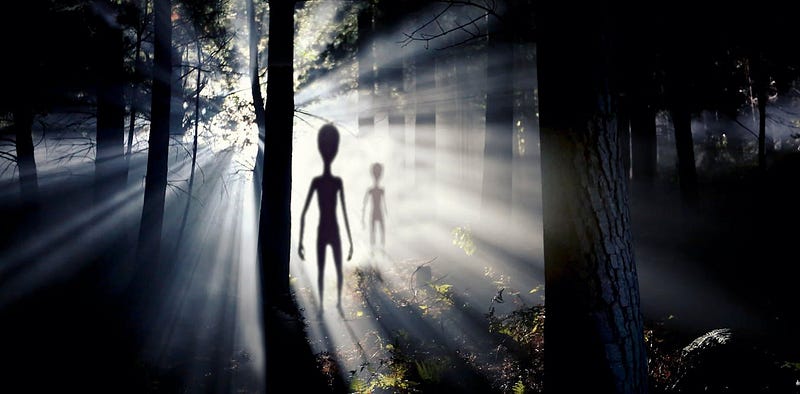
The Dark Forest Theory: Why We Haven’t Found Aliens and What It Means for Humanity

In the vast cosmic silence lies a disturbing possibility about our future — perhaps the most significant explanation for why we seem so alone in the universe.

The night sky presents us with a paradox. Despite containing hundreds of billions of galaxies, each with hundreds of billions of stars, many with their planetary systems, we’ve detected no clear evidence of intelligent alien life. This silence is profoundly strange. Where is everybody?

The Fermi Paradox Revisited

Enrico Fermi first posed this question in 1950. Given the vastness of the universe and its age (13.8 billion years), intelligent life should have emerged and spread throughout the galaxy many times over. Even with the technological limitations we can imagine, a species only slightly more advanced than our own could colonize the entire Milky Way in a few million years — a blink in cosmic timescales.

Yet we observe no evidence of extraterrestrial civilizations: no megastructures around stars, interstellar radio communications, or probes visiting our solar system. This discrepancy between expectation and observation constitutes the Fermi Paradox, and it suggests something profound is preventing the universe from teeming with detectable intelligent life.

The typical explanations range from the mundane to the apocalyptic. Life is scarce. Perhaps civilizations inevitably destroy themselves once they develop nuclear weapons or artificial intelligence. Maybe we’re looking for the wrong signals or aliens communicate through means we cannot comprehend.

But there’s another explanation gaining traction among astrobiologists, physicists, and philosophers — one that paints a more chilling picture of our cosmic neighborhood.

The Dark Forest: A Cosmic Game Theory

Liu Cixin’s science fiction masterpiece The Three-Body Problem introduced many Western readers to the Dark Forest Theory. The theory’s name derives from a metaphor: imagine the universe as a dark forest filled with hunters. Every civilization is a hunter armed with a gun, moving silently through the trees.

In this dark forest, two principles govern behavior:

First, survival is the primary need of civilization. Second, resources are finite.

Given these two principles, Liu argues that if a civilization discovers another, it has no way to know if that civilization is benevolent or malevolent. More importantly, there is no way to see if they will remain benevolent if they one day develop overwhelming technological superiority.

Therefore, the only rational choice is to eliminate any emerging civilization before it becomes a threat.

“The universe is a dark forest,” Liu writes. “Every civilization is an armed hunter stalking through the trees like a ghost… The hunter has to be careful because there are stealthy hunters everywhere in the forest, like him. If he finds another life — another hunter, angel, or a demon, a delicate infant to tottering old man, a fairy or demigod — there’s only one thing he can do: open fire and eliminate them.”

In this model, silence becomes the optimal survival strategy. Any civilization that reveals its position by broadcasting signals or actively exploring risks attracting unwanted attention.

Beyond Science Fiction: The Game Theory of Silence

While Liu’s work is fiction, scientists and philosophers independently developed similar ideas based on game theory.

Dr. Alexander Zaitsev of the Russian Academy of Sciences argues that active transmission of signals to potential extraterrestrial civilizations — known as Messaging to Extraterrestrial Intelligence (METI) — is potentially suicidal. Similarly, Stephen Hawking warned about revealing our existence: “If aliens visit us, the outcome would be much as when Columbus landed in America, which didn’t turn out well for the Native Americans.”

The Dark Forest Theory is compelling because it doesn’t require aliens to be inherently malevolent. It only requires that they be rational actors concerned with their survival in an environment of limited resources and unlimited risk.

Game theorists call this a “Nash equilibrium” — a situation where all participants converge on the same strategy because no other approach offers better outcomes.

“The mathematics of game theory leads inexorably to all participants choosing silence,” explains Dr. Eleanor Sagan, astrobiologist at MIT. “Even benevolent civilizations would likely adopt this strategy, not out of malice, but out of prudence.”

The Great Filter: Are We Past It or Ahead of It?

The Dark Forest Theory connects with another prominent explanation for the Fermi Paradox: the Great Filter hypothesis. This hypothesis suggests there must be some developmental stage — a filter — that prevents life from evolving to the point of interstellar colonization.

The disturbing question becomes: is this filter behind or ahead of us?

If the filter is behind us—perhaps the development of multicellular life or the evolution of intelligence was vanishingly improbable—then we may be among the first intelligent species to emerge in our galaxy. This would explain the silence, but it also places a tremendous responsibility on humanity as potential first movers.

If the filter lies ahead of us, the implications are darker. Perhaps civilizations inevitably destroy themselves through nuclear war, climate change, or artificial intelligence gone awry. Or, as the Dark Forest Theory suggests, they may be systematically eliminated once they make their presence known.

“The most terrifying possibility,” notes physicist Dr. James Chen, “is that the Great Filter isn’t a single event but a gauntlet of challenges facing advancing civilization. We may have passed some filters only to face even more dangerous ones ahead.”

The Light in the Forest: Counter-Arguments

Not all scientists accept the Dark Forest hypothesis. Some, like Dr. Seth Shostak of the SETI Institute, point out that aggressive resource acquisition across interstellar distances makes little practical sense.

“The energy required to travel between stars is enormous,” Shostak argues. “Any civilization capable of interstellar travel likely has solved their resource problems through advanced technology. Why travel light years to conquer when you can create what you need at home?”

Others suggest that truly advanced civilizations transcend resource competition altogether, perhaps by digitizing their consciousnesses or harnessing vacuum energy, which is theoretically limitless.

Anthropologist Dr. Maria Diaz offers another perspective: “Our projection of aggression and resource competition onto hypothetical aliens may say more about human psychology than alien motivation. We imagine aliens as mirrors of our worst impulses rather than considering truly alien mindsets.”

These counter-arguments offer some comfort but rely on assumptions about alien psychology and technology that we cannot verify.

The Observer Effect: Are We Already Visible?

Whether or not the Dark Forest Theory explains the Fermi Paradox, a practical question emerges: is it too late for humanity to hide?

Earth has been broadcasting electromagnetic signals for over a century. Our radio and television signals have created an expanding sphere of electromagnetic radiation that currently reaches approximately 100 light years in all directions and encompasses thousands of star systems.

Additionally, advanced civilizations observing Earth transiting the sun could detect our atmospheric composition (particularly our oxygen-rich atmosphere and pollutants). Spectroscopic analysis of exoplanet atmospheres is already within our technological grasp; a more advanced civilization could detect biological and industrial signatures from much greater distances.

“If there are observers within 100 light years with technology comparable to our own, they already know we’re here,” explains astronomer Dr. Jennifer Marks. “The decision to remain silent would be closing the proverbial barn door after the horse has bolted.”

This sobering reality suggests that if the Dark Forest Theory is correct, our window for choosing silence may have already closed.

The Visibility Dilemma: To Broadcast or Not?

This leads humanity to a profound dilemma. Should we actively broadcast our presence through projects like METI, hoping to establish contact with benevolent civilizations? Or should we adopt what some call “the cosmic silence protocol” — minimizing our electromagnetic footprint while passively listening for signals?

Both approaches carry existential risks and potential rewards.

Active broadcasting attracts beneficial contact with advanced civilizations that share knowledge or technologies. It could also confirm that we’re not alone in our cosmic journey, a philosophical revelation of immense significance. But if the Dark Forest Theory holds true, it could also mark our civilization for extinction.

If predatory civilizations exist, remaining silent while listening might be safer. However, it also means that transformative contact and knowledge exchange opportunities are missing.

This dilemma has tangible policy implications. Organizations like METI International actively send signals to nearby star systems, while others call for international protocols prohibiting such transmissions without global consensus.

“This isn’t merely academic,” asserts policy expert Dr. Richard Kim. “If there’s even a small chance the Dark Forest scenario is accurate, broadcasting might constitute the greatest existential risk humanity has ever taken — one made without democratic consent.”

Living in the Forest: Implications for Humanity’s Future

Whether or not we accept the Dark Forest Theory as the explanation for cosmic silence, its implications offer a valuable perspective on humanity’s future.

First, our window for resolving existential risks may be limited. If technological civilizations typically destroy themselves or are destroyed once detectable, our species needs to prioritize addressing threats like climate change, nuclear war, and unaligned artificial intelligence with greater urgency.

Second, space colonization might be crucial for species survival. As physicist Brandon Carter has argued, having all humans on one planet creates a single point of failure. Establishing self-sustaining human settlements beyond Earth would create redundancy against extinction events — whether natural, self-inflicted, or externally imposed.

Third, it reminds us that our cosmic perspective is still in infancy. We’ve been searching for extraterrestrial intelligence for barely sixty years using methods that assume aliens would communicate as we do. Our failure to detect signals may reflect our technological limitations rather than the absence of intelligent life.

“We’re like early humans who have just mastered fire, wondering why we don’t see other fires burning across the distant hills,” says astronomer Dr. Maria Gonzalez. “We may lack the perceptual and technological framework to recognize signals surrounding us.”

The Philosophy of Cosmic Silence

Beyond its scientific implications, the Dark Forest Theory intersects with profound philosophical questions about humanity’s place in the cosmos.

We assumed we were the center of creation for much of our history. Copernicus displaced Earth from the center of the universe, and Darwin removed humans from biological exceptionalism. SETI’s ongoing silence suggests we may be alone—at least in our detectable vicinity.

This apparent isolation creates what philosopher Eugene Thacker calls “cosmic pessimism”—the vertigo-inducing recognition of our insignificance in the vastness of the universe, combined with the possibility that we bear sole responsibility for preserving consciousness in our corner of the cosmos.

“The Dark Forest Theory creates an existential paradox,” notes philosopher Dr. Sarah Chen. “It simultaneously diminishes humanity by suggesting advanced civilizations are common enough to create this dynamic, while elevating our responsibility as potential survivors in a hostile cosmos.”

This tension between cosmic insignificance and profound responsibility represents perhaps the most mature relationship humanity could have with the universe — neither the childish assumption of centrality nor nihilistic surrender to meaninglessness.

Listening in the Silence: The Path Forward

How should we proceed in light of these possibilities?

The most reasonable approach balances cautious SETI (Search for Extraterrestrial Intelligence) with restrained METI. We should continue listening across broader frequency ranges and scanning for technosignatures, while carefully considering the content and target of any outbound messages.

More importantly, we should accelerate the development of astrobiology and planetary science to better understand life’s prevalence and development. Each exoplanet characterized and each understanding of extremophile organisms on Earth provides data points to refine our estimates of where we stand about the Great Filter.

Simultaneously, we must urgently address existential risks and establish self-sustaining human presence beyond Earth as insurance against planetary catastrophe. The same technologies that enable interplanetary colonization will enhance our ability to detect and understand potential signals from the stars.

“The silence we observe needn’t paralyze us with fear,” astrobiologist Dr. Michael Chen concludes. “It should instead humble us with awareness that we may be rare, precious, and responsible for carrying the torch of consciousness forward — whether alone or not.”

In the cosmic dark forest, perhaps the wisest course lies neither in shouting nor hiding in fear. Hide in mindfully devit is to mindfully developing while preserving the light of consciousness we know exists. After all, in a genuinely dark forest, sometimes the most essential act is simply keeping.